Bud Industries

Published on: July 28, 2025 by Josiah Haas
Specifying a telecom enclosure shouldn’t slow you down.
As an electrical engineer, your priorities are clear: keep your project on schedule, your equipment cool and secure, and your maintenance team happy with a layout that makes sense.
That’s where the right telecommunications enclosure makes all the difference.
This guide explains what to look for in a telecom enclosure—whether you’re designing a high-density distribution hub, a remote node, or an equipment room that needs to scale with future demand.
A telecom enclosure is a physical rack or cabinet that houses networking and communication equipment—such as routers, switches, patch panels, and modems. These enclosures organize your gear, route cables, manage airflow, and protect your investment from dust, tampering, and environmental stress.
They’re essential for maintaining uptime, supporting proper equipment function, and simplifying future reconfiguration. And when designed well, they can do all this while helping you hit tight deployment deadlines.
One of the first choices to make: open-frame rack or enclosed cabinet?
If you’re trying to balance security with access, hybrid cabinets with removable side panels and vented doors offer the best of both worlds. Make sure they are fitted with fan trays.
For smaller deployments, we offer wall-mount open racks that optimize floor space. For applications in which the equipment will be located in a public space, we also offer enclosed, lockable wall-mount cabinets.
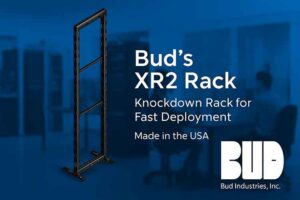
Here’s what we hear from engineers like you:
1. “I need to get this installed fast.”
Time-to-market matters. Look for enclosures that are stocked in standard sizes and ship quickly from U.S. warehouses or distributor stock in your region. You’ll save days—or even weeks—versus waiting on made-to-order units.
Another time-saver is to ask your supplier to pre-install shelves, chassis, casters, cable organizers, fans, power strips, etc. and then drop-ship directly to your end-user locations.
And when custom is required, partner with a vendor that can adjust a standard design and manufacture quickly. Bud has the expert labor and automation needed for fast turnarounds and design flexibility.
2. “It has to stay cool.”
The reliability of your telecom electronics depends on airflow. Equipment failures due to heat buildup are a common source of downtime. Make sure your enclosure supports:
If you’re deploying in a warm environment or stacking high-power gear, confirm that the enclosure can manage the heat without needing a full HVAC redesign.
3. “Service and maintenance can’t be a hassle.”
Technicians need space to work—and smart routing reduces troubleshooting time. A well-designed telecom enclosure offers:
These features may sound minor, but they make maintenance less stressful—and your build more professional.
As you plan your enclosure, also consider:
Equipment Room Requirements
Telecom equipment rooms need flexibility. Be sure to choose enclosures that fit your available ceiling height, floor space, and cable pathways. If you’re tight on depth, wall-mount cabinets or shallow enclosures may be a better fit.
Accessory Compatibility
Not all shelves, fans, and power strips are universal. Save time by sourcing accessories from the same manufacturer—or choose an enclosure provider that installs accessories before shipment.
If standard racks don’t fit your layout or airflow strategy, a custom telecom rack may be worth it. For example, you might need:
A responsive vendor can turn around modified enclosures in days—not months—so custom doesn’t have to mean slow.
Bud Industries offers a wide selection of 19- and 23-inch telecom enclosures, available through all the major electronics distributors. We support engineers with fast shipping, application support, and value-driven customization.