Bud Industries

Published on: June 23, 2026 by Josiah Haas
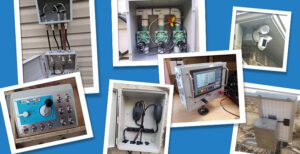
From NEMA ratings to outdoor installations, here is what the spec sheet won’t tell you
An electrical enclosure is the unsung hero of any system design, the bodyguard that nobody notices until it stops doing its job. Whether you’re housing a relay panel in a factory or junctions mounted to an outdoor pole, the enclosure you choose determines how long your equipment lasts, how safe your installation is, and whether you’ll be troubleshooting a failure at 2 a.m. or sleeping soundly.
Bud Industries has manufactured electrical enclosures for nearly a century. My blog post covers the fundamentals: what electrical enclosures are, the types available, and what it takes to put one outside safely.
What is an electrical enclosure?
The National Electrical Manufacturers Association (NEMA) defines an electrical enclosure simply as a cabinet or electrical box that protects electrical or electronic equipment and prevents electrical shock. That definition is minimal by design — it has to cover everything from a small plastic project box to a large steel industrial cabinet.
In practice, an enclosure does any or all of three things: it shields components from environmental threats like dust, moisture, and corrosive agents; it protects people from accidentally contacting live electrical parts; and it gives the installation a physical structure that can be mounted, labeled, and maintained. Those functions remain consistent whether the enclosure is a small metal box or a full-size industrial cabinet on a production floor.
It’s worth distinguishing enclosures from electrical panels or breaker boxes. Those residential and commercial terms refer to load centers that distribute utility power to circuits throughout a building — a different category entirely. Industrial and commercial electrical enclosures house control components including circuit boards, circuit protection devices, switches, relays, electrical wire junctions, and similar equipment in a hardened protective structure.
What I find interesting about this field is the broad range of enclosure applications from industrial automation to maker projects. I know of one customer who used a PTQ-11064-C electrical enclosure to protect a sound-system iPad in a school gym. In this application, the challenge was that the iPad needed to be accessible to staff for adjustments, but it also needed protection against the inevitable flying basketballs and general physical abuse of a school gym environment. The fiberglass-reinforced body handled the impact risk, the hinged lid kept the tablet accessible, and the stainless-steel latches kept it secure when not in use.
What are the different types of electrical enclosures?
Enclosures are typically characterized by three factors: mounting style, material, and protection rating. Understanding all three helps you match the right product to the application.
Mounting style
Wall-mounted enclosures are the most common choice for compact, indoor, or low-power applications where floor space is limited. Floor-mounted or freestanding cabinets are larger structures suited for heavy industrial automation and energy systems. Junction boxes—smaller enclosures designed to connect or branch electrical circuits—fall into their own category and are used throughout facilities wherever wiring needs to be spliced or transitioned. Pole-mounted units are common in outdoor infrastructure like street lighting and utility hubs.
Material
Carbon steel is the standard for general indoor industrial use. It’s durable and typically powder-coated to resist rust. Stainless steel handles corrosive environments: food processing, chemical processing, pharmaceutical manufacturing, and marine installations. Non-metallic materials like fiberglass and polycarbonate are non-conductive and well suited for some chemically aggressive environments.
Aluminum brings a lighter weight with solid corrosion resistance, making it a good fit for outdoor applications. Aluminum also absorbs and radiates heat. One of our customers switched from plastic Bud enclosures to the CN-6710 electrical enclosure because he needed the die cast aluminum walls to act as a passive heat sink for solid-state relays.
Bud offers enclosures across all of these material categories. Explore our steel enclosures, die cast aluminum enclosures, and fiberglass enclosures to compare options.
Electrical Enclosure Protection ratings
NEMA ratings (used in North America) and IP ratings (the international standard) both describe how well an enclosure keeps out environmental hazards. Here’s a quick overview of the ratings you’ll encounter most often:
Bud’s NEMA-rated enclosure lineup covers Types 1, 3R, 4, 4X, and 12 across multiple materials and sizes.
Can an electrical enclosure be outside?
Yes, but only if it’s explicitly rated for outdoor use. Installing an indoor-rated enclosure outside is both a safety hazard and a code violation. Moisture infiltration can cause short circuits, equipment failure, and shock risk. The enclosure must be built for the conditions it will face.
For most outdoor applications, NEMA 4 is the floor, and NEMA 4X is the right call if corrosion is a factor, such as saltwater exposure, chemical vapors, or washdown environments. Both ratings require watertight construction and dust-tight sealing. Equivalent IP ratings are IP66 (jet-proof) or IP67 (short-term immersion), but NEMA ratings are the dominant specification in North America.
A homeowner building a WiFi-controlled irrigation system needed an enclosure that could live outside, handle rain, and still be easy to open for occasional maintenance. He chose a model in our NBF series, drilled the conduit holes himself without issue, and used the included mounting flanges to attach the electrical box to the wall. The box handled outdoor exposure cleanly, and the snap-open latch made accessing the controller straightforward whenever adjustments were needed.
Material matters to outdoor enclosures too. Stainless steel and fiberglass both handle outdoor exposure well; standard carbon steel needs a robust coating to resist rust over time. UV-resistant polycarbonate is another practical option for non-metallic enclosures in direct sunlight.
Installation details are just as important as the enclosure rating. Conduits should enter from the bottom or be protected with cable glands. The enclosure should be mounted securely and positioned to minimize standing water accumulation around seams and door gaskets. A well-specified enclosure installed poorly can still fail.
For more on outdoor-specific considerations, see Bud’s guide to five typical mistakes in specifying an outdoor enclosure. Bud’s outdoor electrical enclosures include NEMA 4 and 4X rated options in aluminum, stainless steel, and fiberglass.
Choosing the right enclosure for your application
Every enclosure decision starts with environment, then narrows to material and rating. Ask these questions before you specify:
Where is the enclosure going — indoor or outdoor? If outdoor, what are the exposure risks: rain, salt air, direct sunlight, chemical vapors, or extreme temperature swings? What protection rating does that environment require? Does the application call for metal (strength, shielding) or non-metallic (non-conductive, corrosion-proof)? What are the size constraints, and does the enclosure need modifications — cutouts, holes, or custom hardware?
That last point is worth lingering on. Off-the-shelf enclosures always need modification. Bud modifies enclosures to spec with holes and cutouts made in five days. That’s faster than sourcing a job shop and cheaper than scrapping an enclosure that you drilled wrong. See our custom enclosure modification service page for details.
Bud Industries stocks more than 3200 standard enclosure products across a wide range of sizes, materials, and ratings. If you know your environment, Bud can get you the right electrical box modified without the usual lead times. Browse by size and type to find the right fit for your project.