Bud Industries

Published on: June 19, 2026 by Josiah Haas
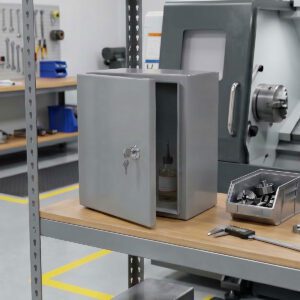
If you’ve ever been handed a drawing with “NEMA 13” written next to the enclosure callout, you’ve probably noticed something: NEMA 13 sounds like it should be a high-end rating. The number is bigger than NEMA 4. Bigger than NEMA 12. So, it must be more protective, right?
Not exactly. NEMA ratings don’t work as a ladder where higher numbers mean more protection. NEMA 13 is a specialized indoor rating with one job, and understanding what that job is — and isn’t — keeps engineers from over-specifying or, worse, choosing a rating that lets equipment fail.
Here’s a clear, practical look at what NEMA 13 covers, when it makes sense to specify, and when a different rating will serve you better.
NEMA 13 is an indoor enclosure rating defined by the National Electrical Manufacturers Association (NEMA 250). It protects equipment against the conditions you’d expect to find on a busy factory floor: airborne dust, lint, and fibers; dripping and light splashing water. Importantly, the rating’s distinctive feature is protection from the spraying, splashing, and seepage of non-corrosive oil and coolants.
NEMA 13 was created specifically for indoor environments where electrical components sit near machinery that throws cutting oil, lubricant, or coolant into the air. Think CNC machine cells, lathes, hydraulic systems, and the pushbutton stations and pilot devices mounted near them.
To earn the rating, an NEMA enclosure has to pass tests covering:
Two important qualifiers are baked into the standard. First, NEMA 13 is indoor only. It’s not built for rain, sleet, snow, submersion, or windblown dust. If equipment is going outside, you need a different rating, typically NEMA 3R, NEMA 4, NEMA 4X, or NEMA 6P . Second, the oil and coolant protection applies only to non-corrosive fluids. Aggressive chemicals, harsh cleaners, and corrosive process fluids require corrosion-resistant materials, which not all NEMA 13 enclosures have.
It’s also worth knowing how NEMA 13 maps to international standards. In rough equivalence, NEMA 13 corresponds to about IP54: protected against dust ingress and splashing water from any direction. For a fuller breakdown of how the two systems line up, see NEMA vs. IP Enclosure Protection Ratings.
I know of a rebuild of a 3040Z benchtop CNC router where the LinuxCNC PC interface, stepper drivers, and 48 V supply are installed inside a Bud Industries NBF‑32026 plastic box mounted next to the machine. CNC routers throw aluminum chip and coolant mist directly toward the controller. Bud’s SNB Series NEMA 13 enclosure keeps that mist and oily swarf out of the electronics, while the powder-coated steel avoids the rust streaks that plague steel enclosures in chip‑laden shops.
Another application is housing electrical devices on hydraulic equipment. Solenoid-valve drivers and pressure-switch junction boxes sit on the hydraulic power unit, where the box gets wet with hydraulic oil weeping from fittings. The Bud SNB series enclosure keeps the oil out of the electrical splices and contactors.
Small machine shops may use robots for bench-top pick-and-place, deburring, and tending arms. Each robot needs an enclosure to house the controller, stepper motor drivers, power supplies, and I/O terminals. The manual for the robotic manufacturer recommends an enclosure made of plastic like Bud’s HD Series NEMA 13-rated enclosure. Installed next to milling machines, grinders, and lathes, the enclosure will be hit by coolant and cutting oil overspray. The polycarbonate plastic resists corrosion, and the tightly sealed design keeps out liquids as well as metal flyings.
This is the comparison that matters most, because NEMA 12 and NEMA 13 cover nearly identical ground. Both are indoor ratings. Both protect against dust, lint, fibers, and dripping water. Both use gasketed seals. The difference is narrow but specific: NEMA 13 adds verified protection against oil and coolant spray.
Here’s the honest reality of how these NEMA ratings get specified in practice:
NEMA 12 is by far the most common indoor rating for industrial control panels, automation cabinets, and electronic drives. For typical manufacturing environments, NEMA 12 does the job and is widely available across materials and sizes.
NEMA 13 is a specialty rating for the subset of indoor applications where oil or coolant spray is a regular, defining feature of the environment. CNC machining, lathe operations, hydraulic equipment maintenance bays… places where you’d expect to wipe oil off the enclosure during a shift change.
A few cases where NEMA 13 is not the right call, even when oil is present:
For most indoor industrial applications, the practical decision tree looks like this:
By the way, most of Bud’s NEMA-rated enclosures are eligible for the 5-Day Modifications Program — fastest cutout turnaround in the industry, no surcharge. If you’ve selected the right rating but need cable entries, viewing windows, or panel cutouts, you can have the modified enclosure in your hands in a week. Browse the full NEMA/IP rated lineup or contact us with your application and we’ll point you at the right rating, material, and series.