How to Modify Enclosures to Get the Design You Need for Less Time and Cost

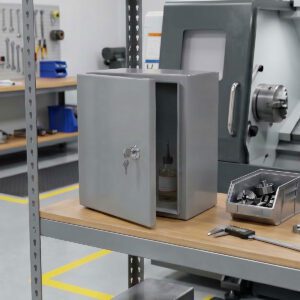
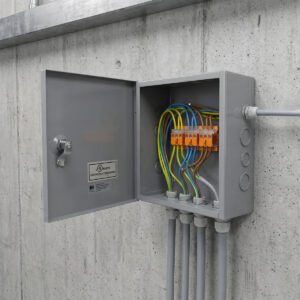
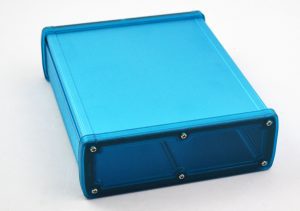
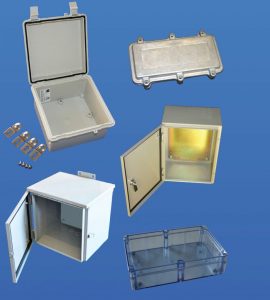
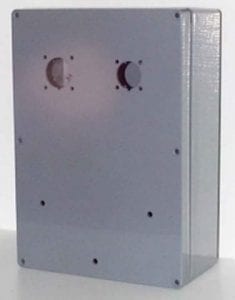
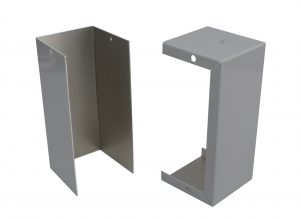
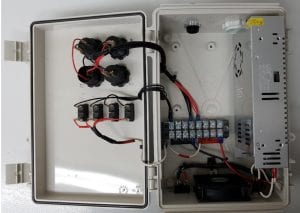
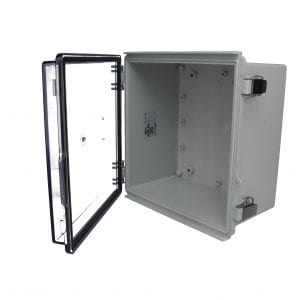
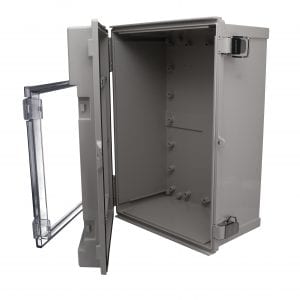
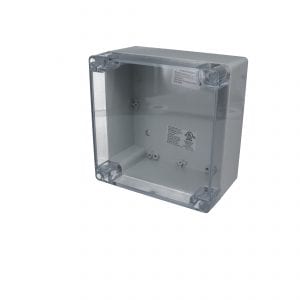
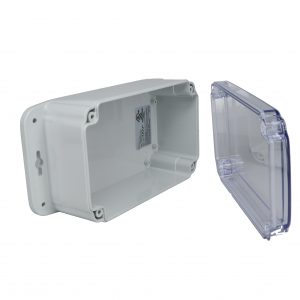
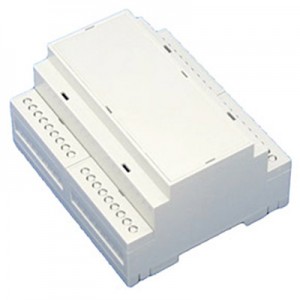
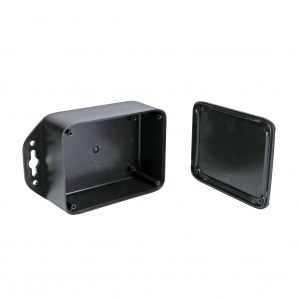
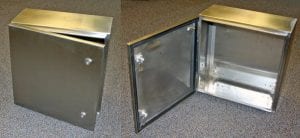
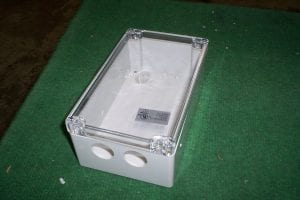
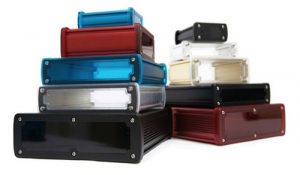
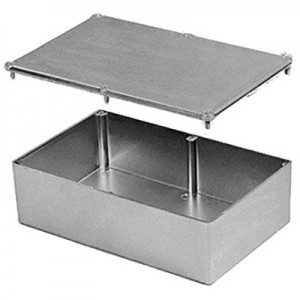
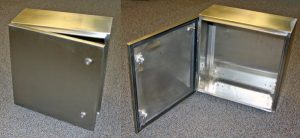
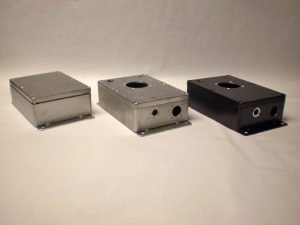
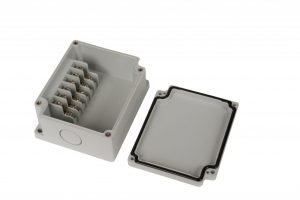
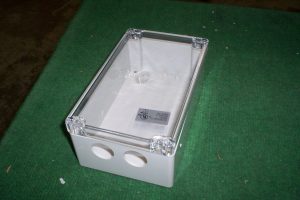
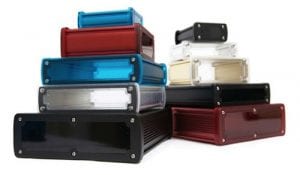
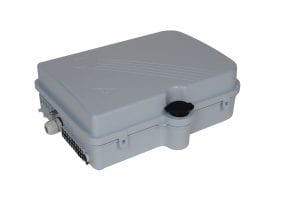
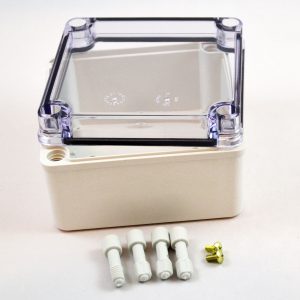
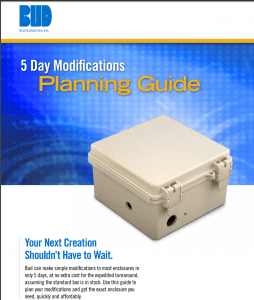
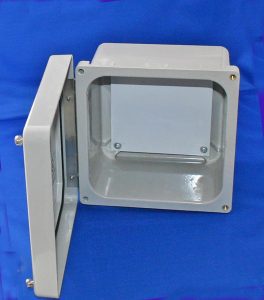
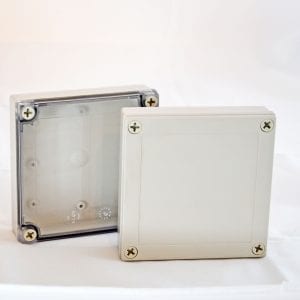
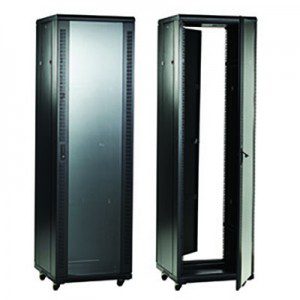
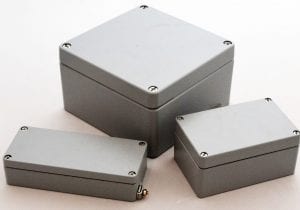
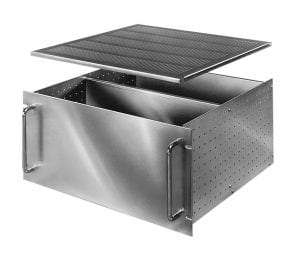
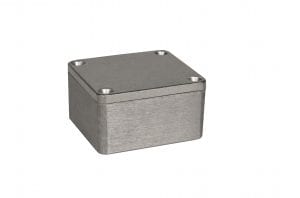
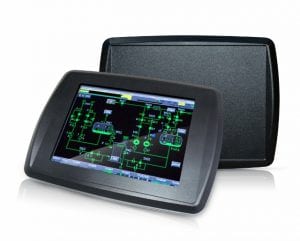
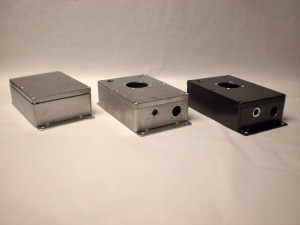
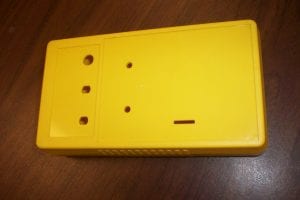
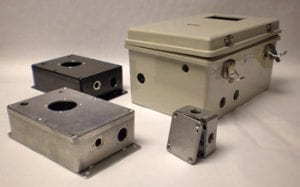
What distinguishes a simple metal or plastic box from a functional electronic enclosure? Most often, it’s the modifications necessary to allow access to the interior, stabilize and protect its contents, and present the appropriate appearance. Enclosures typically need a minimum of one cutout for a power cable and often many other modifications, which can include holes, cutouts, tappings, gaskets, pre-assembly, and finishing. Continue reading

Posted in Electronic Enclosures, Enclosure Design | Tagged , | Leave a comment

Training on Enclosures is a good Investment

Education is one of those areas that is on everyone’s “to do” list.  We all know we need to keep up in today’s fast moving marketplace yet finding the time to attend classes, even virtually, is a huge challenge.  Even more difficult is finding options that are quick, meaningful, and easy to attend.  Newark Element 14 is hosting a series of Webinar 101 sessions that are run by their top vendors and are meet those needs and if the timing does not work for you, there is an opportunity to listen to the session later although the live question and answer period will not be available.

Of great interest to me is that I will be hosting a session on Electronic Enclosures that is titled “How to avoid the top 10 pitfalls in designing  and specifying an enclosure”.  The session will be held this Tuesday, April 23 at noon central time.  You can sign up below:

http://www.element14.com/community/events/3611

It will be a simple, no-nonsense approach to learning what not to do, and by extension, what to do to make sure that the enclosure you select is the best for your application.  All too often, engineers understand the intricacies of the electronics but have not really been trained in the basics of enclosures.  While it may seem very low tech, the products often have a high average selling price and therefore can make a huge impact in the ability to use and sell the final product.   This session will help guide you through the process to be sure that you make the best choices.

Join me on April 23.  I look forward to chatting with you.

Posted in cabinet rack, Electronic Enclosures, Enclosure Design, Enclosure Design Tips, Freedom Platform, News | Tagged , | Leave a comment

Bud Develops Electronic Enclosure For Freescale Freedom Platform

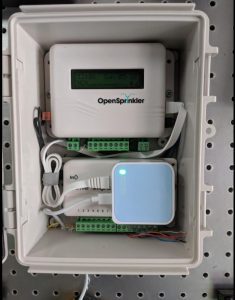
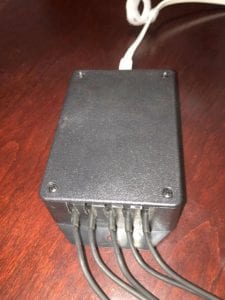
The Freescale™ Freedom Development Platform Model FRDM-KL25Z is a development platform designed to work with other minicomputers such as the raspberry PI and other development boards such as the Arduino Uno. Bud’s new FBB-3665 enclosure has been manufactured to fit the Freedom Platform and is made of four separate parts (top, bottom, front, and rear panels.)  We have created accessibility in the front panel to allow connection to KL25Z USB, Open SDA USB and the reset button. The side slot is designed to accommodate flat cables from both IO header banks and the PCB can be removed without removing the cables.  There are round knockout plugs to accommodate optional miniature cable glands (NG-9511).  Plus, it is well ventilated to allow heat to escape. This enclosure has added to our board development driven enclosure line which includes our PS-11591 Pi Sandwich and PP-11594 Pi Plate for the Raspberry PI programming board.  Check out our video on this exciting enclosure.


Posted in Electronic Enclosures, Freedom Platform, Plastic box, Plastic Electronic Enclosure, Raspberry Pi case | Leave a comment

Listening to the Electronic Enclosure Customer

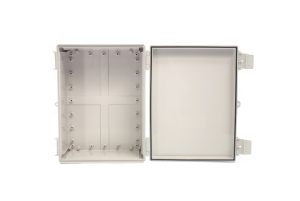
It is often difficult for a company to shift course, especially when it is an 85 year old business.  However, here at Bud, a recurrent theme has been the need for speed.  Customers need enclosures fast and not just standard enclosures, but modified electronic enclosures as well.  To meet this demand, we have created a 5 day delivery program on modified enclosures.  To do this, we changed two things.  First, and foremost, we have streamlined our order processing, implementing a rapid engineering process and a cad to CNC download program that significantly improved our speed.  We then increased our inventories on standard products, allowing us to pull the standards from stock, modify them, and get them to the customer in only 5 days.  This is an industry leading delivery time, and has created a huge demand for our services at a time when others are talking about an industry slowdown.  We have over a 98% on time rate on these orders and will continue to improve on that record.  We may be 85, but we are becoming as nimble as a teenager and look for other ways to be even more responsive to our customers needs.
Posted in Electronic Enclosures, Modified electronic Enclosures | Leave a comment

Electronica Musings on Electronic Enclosures

I have just returned from Electronica in Munich and was amazed by its size and scope.  There is nothing like it in the US, both for the breadth of products that are represented as well as for the numbers of companies who go to extremes to make an impact at the show.  From people demonstrating chips by dancing “Gangham” Style to race cars to Marilyn Monroe look alikes, this show has it all.  But what delights me is the impact that all components, especially Electronic Enclosures has in creating a truly whole industry.  It still attracts companies of all sizes, we are all still innovating, we are moving with the market as electronics becomes an innate part of our lives.  I listened to an economist forecasting the future of our industry and he noted that with areas such as medical electronics, products to provide support for the aging, information technology of all sorts, the future of our industry is even greater than it has been with the consumer electronics explosion.  For all of us, as we learn to develop new skills and new services, we will continue to evolve and lead the world economy.
Posted in cabinet rack, Electronic Distribution, Electronic Enclosures, Enclosure Design | Leave a comment

Five Ways to Save Money on your Factory Floor Enclosure

In these challenging economic times, saving money has become an overriding concern in all product specification. In the selection of enclosures to use on the factory floor, there are five issues to consider insuring that you choose the most effective, but economical solution for your application.

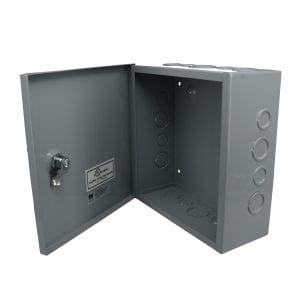
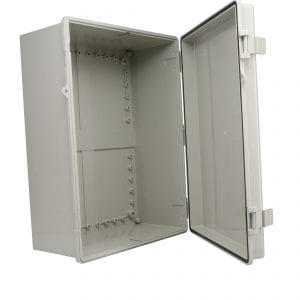
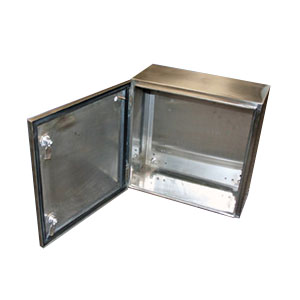
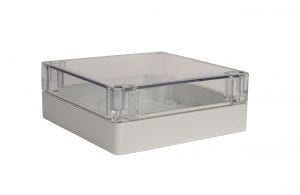
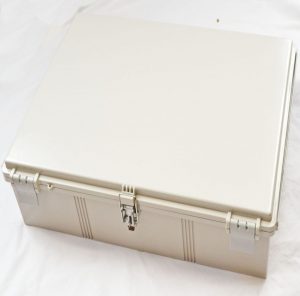
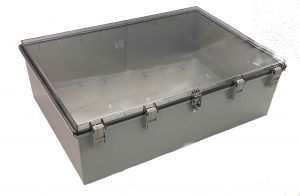
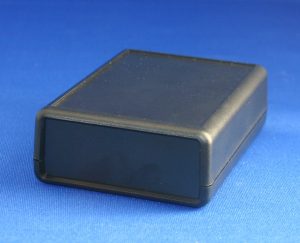
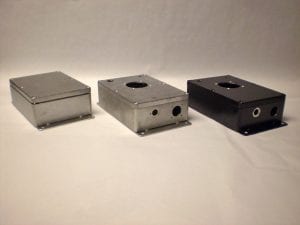
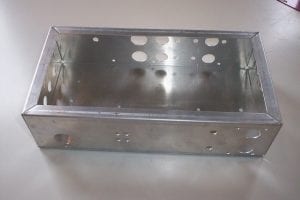
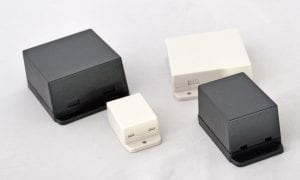
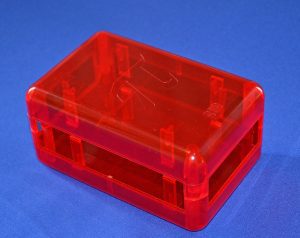
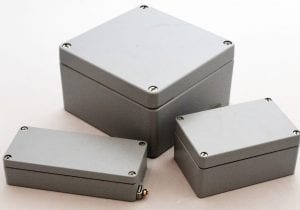
1. Do you need NEMA protection at all? With factory floors increasingly clean, the need to protect sensitive equipment from dirt, dust, and liquids is significantly reduced. By specifying a traditional enclosure instead of a NEMA enclosure, the savings can be as much as 50-75%. Often, just an enclosure like the enclosure shown at right can provide enough protection at a very inexpensive price.

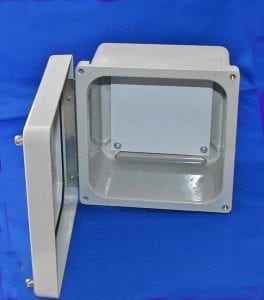
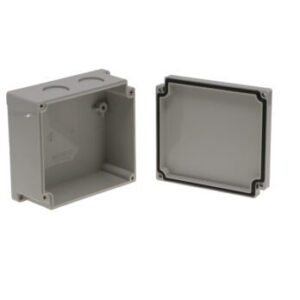
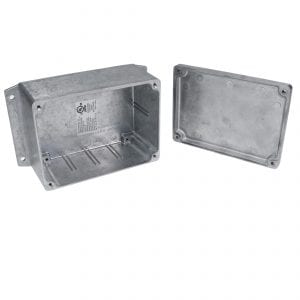
2. Do you need to protect then entire enclosure, or only a sensitive component? Size matters in protection. The smaller the item that needs to be protected, the less labor and gasketing goes into the protective enclosure. Therefore, a small die-cast type NEMA box can be selected to fit inside a larger piece of equipment if that is all that needs to be protected.

3. What level of protection is required? There is no point to specify extra protection such as UV stabilization if the enclosure is being used indoors. Often a NEMA 12 enclosure will work if there is no spray down requirement on the floor. Each increasing level of protection can exponentially increase the cost.

4. What material do you actually need? In the U.S., steel is often the choice for NEMA enclosures. However, plastic, the world wide standard, is less expensive and provides great protection in most applications. Steel makes sense only when using an extremely large enclosure or when the environment is extreme. Polycarbonate, fiberglass, and even die cast, all make low cost alternatives for the traditional steel enclosure.

5. Can the manufacturer assist you in making modifications to the enclosure? If you are dealing with more than a few pieces, the vendor has the best equipment to insure that any hole locations, slots, or connector cut-outs are created with no damage to the enclosure. This saves significant money and time in obtaining a turn-key solution to your project

    Often a last minute rushed decision, by asking a few simple questions, the design of the proper factory enclosure can save significant money. Contact your local Newark salesperson to provide assistance on any factory enclosure need.

    Posted in Uncategorized | Leave a comment

    Investing in our Future and our Customers

    Perhaps we are counter-intuitive, but we, at Bud, feel this is a great time to invest in our business.  With our greatest focus on North America, we feel now is the time to upgrade our equipment, take advantage of the tax policies, and continue to improve our offering.  With that in mind, in the last 3 months, we have acquired a new panel bender and brake, investing over $1 million.   These pieces of equipment offer a number of advantages:


    1. Reduces setup time per bend from 30-40 minutes to 2-3 minutes including programming on repeats
    2. Reduces the need for old style experienced brake operator who have become very difficult to find – allowing for a more flexible work force
    3. Increased product run flexibility – can run one piece, can run large quantities, can run all components in series vs production runs, reducing inventory and increasing throughput.  It eliminates the need to focus on an economic order quantity, allowing production to focus on customer needs.
    4. Improved energy savings
    5. Ability to make new products here cost effectively.  For the last 15 years, virtually all new products have been made with our overseas partners.  Now that we have this equipment, we are developing two new product families that can be produced in our facility.

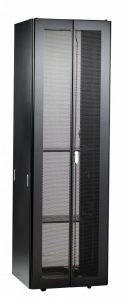
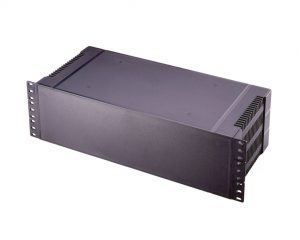
    We have a video of the new panel bender that you can view.  https://www.youtube.com/watch?v=XFIy6HwhCLg&feature=g-all-u .  As you see in this video, our capabilities to improve the throughput on cabinet racks has been significantly enhanced.  We look forward to continuing to exceed our customers’ expectations with this and other innovations here at Bud.

    Posted in cabinet rack, cabinet rack, Electronic Enclosures, Enclosure Design | Leave a comment

    Five Tips for Ensuring Safety with your Electronics Enclosure Choices

    It is always a “truism” of safety that the best way to be safe is to prevent problems.  This can range from testing your tire pressure regularly to making sure your home smoke detector has updated batteries.  In an industrial setting, this is even more important because the safety of those who work or live nearby can be impacted by poor preparations.  With electronic and electrical enclosures, it is important to make the right choices both for equipment that is used to verify safety (meters, monitors, etc.) but also for controls.  A poor choice in control enclosures can endanger the equipment and the operators as well.  Below are five tips for ensuring safety with your enclosure choices:

    1. Be sure to choose an enclosure made from the proper materials.  There are many materials that are available for enclosures in the electronics and electrical marketplace.  Each has advantages and disadvantages ranging from price to durability.  In the safety world, price cannot be the only driver, but security and longevity are crucial.  For example, in an environment with harsh chemicals, the low cost solution of polycarbonate plastics may not be the best choice, but rather steel or other metal enclosure may be more appropriate.  For an outdoor installation, it is important that any plastic is UV stabilized. Other material factors include the product weight if it will be portable, finishing options if the product will be used in a visible location, and durability which might lead to the use of fiberglass versus polycarbonate.
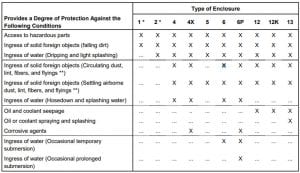
    2. Be sure to choose an enclosure with the proper ratings.   Do you need specific ratings on the enclosure or can you utilize the unit without those ratings?  For example, does the unit need a UL rating or is the manufacturer’s NEMA ratings sufficient?  Bud offers a NEMA enclosure line with several alternatives included an ABS plastic version that does not come with the UL ratings.  It protects the product, but is lower cost than those that receive the UL ratings.  For most applications, this box provides a perfect solution of value and function.  In a similar vein, can you use a box with a lower level of protection?  For example, a NEMA 1 box may suffice where traditionally one has used a NEMA 12 box (see side bar for NEMA description).  Alternatively, if only a specific internal component needs to be EMI/RFI shielded, it is better to protect that component than to shield the entire enclosure.
    3. Be sure to choose an enclosure that can be mounted readily in the location that you need.  If you were to buy a plastic enclosure that needed to be mounted to a piece of equipment, you do not want to deal with putting holes in the enclosure, disrupting your equipment, if it does not have mounting provisions.  The same is true for most enclosures.  In addition, be sure that there are provisions internally for mounting your equipment.  Whether it is mounting bosses such as those inside a die cast or plastic box, or mounting panels that are found within a steel or fiberglass box, it will disrupt your project if this is not considered.  Also, a factory solution ensures that your mounting approach is safe and logical.
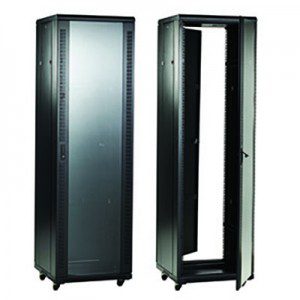
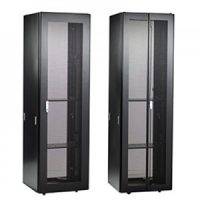
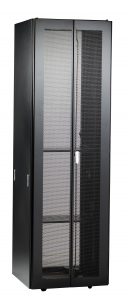
    4. Be sure that the enclosure can handle the weight of the equipment you are seeking to mount.  While your pc boards are typically lightweight, if you are mounting test equipment into a 19″ cabinet rack, will the rails and also the casters hold the weight that you need within the enclosure?  Be sure to verify the weight load characteristics before you attempt to install your servers or test equipment.  In smaller enclosures, weight load is also important to be sure that you are not attempting to load more components than the box can handle.  From a safety perspective, the security of your installation can be compromised with improper preparation for the weight of your components.
    5. Be sure to ask the manufacturer to quote you on modifications.  Very few enclosures can be used as is.  Typically they need holes or slots for input and output, silk screening for directions or notes, and other such alterations to make them usable.  While it would seem that anyone can punch a hole in a box, using the wrong drill speed or size can cause cracks or chips which ruin the integrity of the box.  In some situations, the modifications can be made before forming, -reducing the risk of mis-alignment or other errors.  Further, it reduces the risk of transportation damage with less handling.  Even if it seems inexpensive to have the work done internally, it will often prove more costly in the long run if it is not done correctly.

    While the enclosure is a “low tech” purchase in the high tech world, when it comes to safety, the risks should not be underestimated.  Simple advance preparation can make sure that your safety and the safety of your equipment will be guaranteed and operate as expected.

    Posted in Uncategorized | Leave a comment

    Five Things to Consider When Selecting Enclosures for Energy Applications

    As governments encourage companies to get ‘greener’, more company product teams are designing electronics for use in photovoltaic solar power systems, wind turbines and other equipment used in alternative energy. Even traditional energy systems, which use electronics to control, monitor and consolidate the flow of electricity, are in demand as the global industrial expansion continues. With the emergence of the smart grid, the need for electronics will only accelerate. Purchasing agents, therefore, should understand the special needs of selecting enclosures for the unique needs of the energy industry.

    The proper selection of an enclosure can make a significant difference in the success or failure of a product, both from a design standpoint and from a marketing perspective. In the push to develop products, purchasers often overlook the enclosure until the end of the design cycle when they can’t give their choice of enclosure the attention it deserves. To assist in this crucial process, this article offers five issues to consider when selecting enclosures for energy applications.

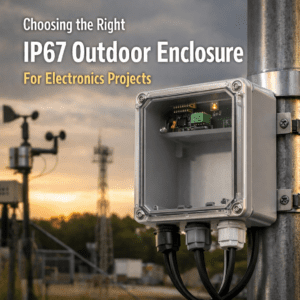
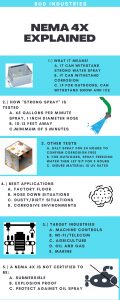
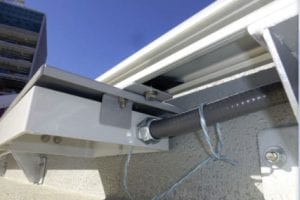
    Location, location, location. As in real estate, location is a crucial factor in enclosure selection. Where the product is going to be installed and used determines the types of materials required and the level of protection needed. For example, wind turbines have devices that control the pitch of the blades. Because the device is being used outdoors, specific NEMA requirements need to be met. Typically, NEMA 4 or 4x enclosures are the best for an outdoor application, although in some situations, a NEMA 12 enclosure will do. NEMA 4 and 4x protect against powerful sprays of water such as might be received during a major rain storm. A NEMA 12 enclosure is appropriate in more protected locations where only dripping water might be encountered. In this application, experts recommend a stainless-steel NEMA 4x box that can withstand the elements and also provide the strength and durability needed to hold the heavy equipment.

    Bud’s SNB Series stainless- steel boxes are the best choice for outdoor enclosure applications.

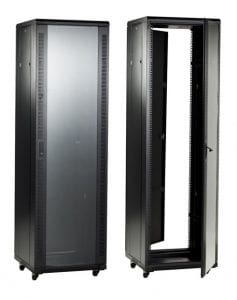
    On the flip side, a console used to house environmental controls in a big box store might installed in a typical 19-inch cabinet rack. As it is located indoors, in an office or warehouse setting, no specific protection is required.

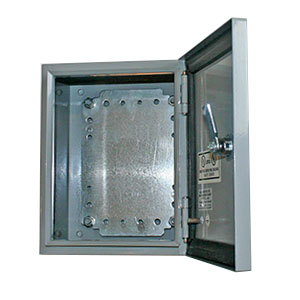
    Don’t stall the installation. The capabilities of the box also are very important.  When mounting a printed circuit board, an enclosure with mounting bosses can be a huge help in maintaining the integrity of the box and speeding installation. If a board is not the primary component, or if a variety of components are being utilized, then having a mounting panel that can readily be installed in the base of the enclosure can be the perfect approach to rapid assembly. Many control boxes are mounted on other equipment or on walls to avoid the damage that might occur if they are left on the floor. Boxes that include brackets or have brackets as an integral part of the enclosure assist in this attachment process.

    Beyond installation concerns, other capabilities to consider include the availability of enclosure accessories and, of course, the available space within the enclosure. Given today’s compressed time-to-market goals, delivery delays can be a real problem. Purchasing agents should understand that selecting a standard enclosure will save precious time over a custom design. If the exact size enclosure is not readily available, then consider a slightly larger enclosure that is in stock. Also, going with a standard-size and style enclosure will open up the choice of vendors, A little homework will identify suppliers who have equivalent products for dramatically less cost, including some who can ship orders on the same day they are received.

    Form follows function. Specific needs of the application can also drive the choice of enclosure.  For example, if the project requires UL approval, then it is often easier to obtain this approval if the box is already UL certified.

    Other ratings to be considered include the NEMA ratings mentioned above and EMI/RFI.  An application that involves collecting excess power from solar panels may need protection both from the elements and from radio waves. In such applications the ideal solution is a die-cast aluminum enclosure that has a double layer of gaskets: a metallic inner gasket for RFI protection and a silicone outer gasket to seal out moisture.


    Bud’s ANS Series enclosure provides double protection: NEMA and EMI/RFI.

    In addition to environmental protection, designers should consider the need for future expansion.  Dimensions are important in an enclosure selection, and often engineers try to save space.  While a small footprint is desirable in the short term, it may cause significant expense in the long term if the enclosure is too small to accommodate additional components.

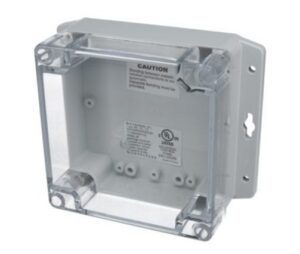
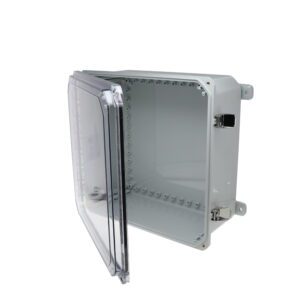
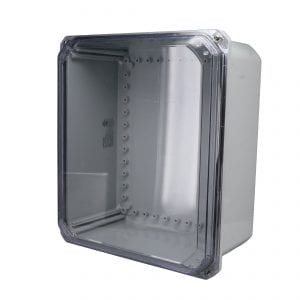
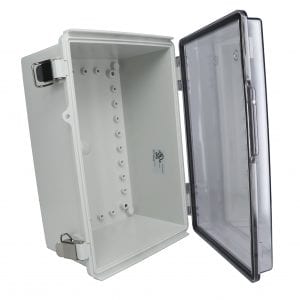
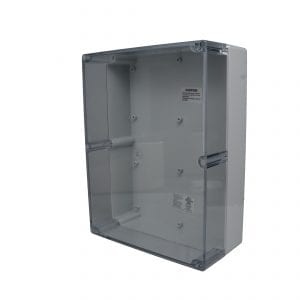
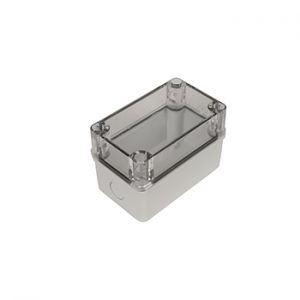
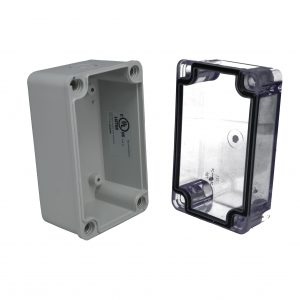
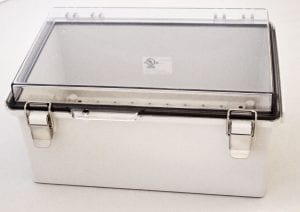
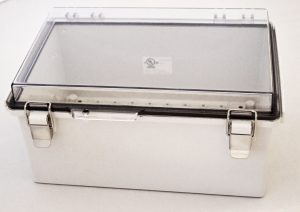
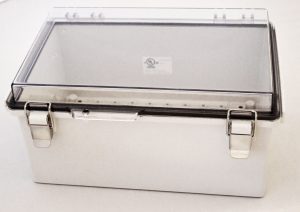
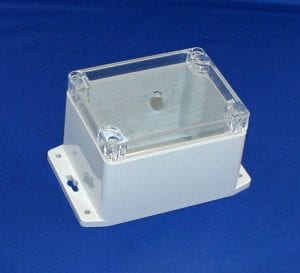
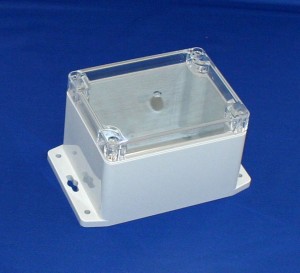
    Another issue is the need for output tracking.  If there are meters to be read, consider NEMA plastic enclosures that come with clear lids. The see-through lids eliminate the need to modify the enclosure with cutouts and also avoid having to acquire NEMA-rated readouts.

    The BT Series from Bud is the first totally transparent NEMA-rated enclosure.

    Weight may be an issue for solar power systems that are roof-mounted, in which case plastic or aluminum enclosures make the most sense. For a wind turbine, the concern may be security, and a locking steel enclosure is the answer.

    Style matters. A non-technical aspect of enclosure selection is the visual appearance of the enclosure. Particularly if an enclosure will be used in an office or home environment, the look and feel of the enclosure is an important part of its design. The purchaser should select the enclosure colors and materials that will help promote the product and ease its acceptance. No homeowner will want an industrial style box controlling his or her solar energy system. A NEMA plastic box with smooth lines would be an obvious choice, as it provides protection against the environment. Plastic can be molded in various colors, providing an easy match with any décor. Even if the enclosure is destined for the factory floor, a visual identity is important to companies trying to differentiate their products in the marketplace.

    Custom fit. A final consideration of enclosure selection is the ease of customization. Unwanted costs may creep into a project when the purchaser fails to consider enclosure modifications.
    Some enclosures come with knockouts for cable access or other accommodations, but most enclosures cannot be used unless they are modified per the specific I/O requirements of the internal equipment. A typical application may require modifications that vary from adding holes, cutouts, or slots to providing silk-screening, decals, or special finishes that reflect instructional and marketing needs.

    Because the vendor has the equipment and experience to easily modify enclosures, it is faster and less expensive to have enclosure supplier make the changes.

    Choosing an enclosure for an energy application should not be a hasty, last-minute decision.  The choice of the wrong box or cabinet can ruin the chances for customer acceptance of the product and create needless delays in the product introduction.  By focusing on the few basic steps outlined above, the enclosure choice can be the final step in insuring a successful product launch.

    Posted in Uncategorized | Leave a comment

    Basics of Enclosure Cooling White Paper

    As electronic and power components are designed into denser, smaller packages, it becomes increasingly important to consider how well how well the equipment dissipates heat. Such equipment has specific operating temperature ranges and when put inside of cabinets and enclosures, temperature can become a big issue. Excessive waste heat generated by equipment within a cabinet is the single most important factor effecting equipment performance, reliability and failure. Cooling should be considered early in the design process. Having an effective cooling strategy can help in adequately dealing with heat dissipation.

    Heat Transfer
    Heat transfer takes place in one of three ways: through radiation, conduction and natural or forced convection. Heat transfer via radiation occurs through electromagnetic waves, an example being the sun’s energy reaching the earth. Heat can also be transferred through conduction between objects in contact; for instance, a microprocessor chip cooled using a heat sink, making direct contact with the chip.

    Most systems remove heat through a combination of methods, even though one may be emphasized. For example, a processor chip may be cooled using a heat sink (conduction) that includes a fan (forced convection). The key to keeping equipment cool is to remove heat from the cabinet while supplying cool air to the places that need it. Enclosure manufacturers can provide guidance to users in selecting the proper cooling approaches.

    The most commonly used cooling methods for enclosures, in order of increasing cost, are natural convection, forced convection (such as fans and blowers) and air conditioning.

    Natural Convection
    Natural convection cooling is adequate for most applications that generate mild heat. Usually, enclosure temperatures may exceed room temperature, yet remain below the temperature limits of the components inside. The key is making sure that the cabinet interior offers an unrestricted airflow path. The cabinet should have sufficient venting at both the top and bottom to promote airflow and a chimney effect. The best way natural airflow is circulated within a cabinet is when it is drawn from the bottom up through the top of the enclosure.

    Top covers can be either fixed or removable and ventilated, or non-ventilated. While fixed covers are cheaper, they block access from the top and make it difficult to machine cable-access or fan-mounting holes. Ventilated covers allow natural exhausting of hot air and help keep the rack cool inside. Some manufacturers provide ventilated tops with pre-punched holes for mounting an exhaust fan if one is needed.

    One problem associated with bringing air into an enclosure is the entry of dust and unwanted particles. Louvers are a popular form of air entry and exit for convection cooling because they provide some protection against dust entry while hiding the contents of the cabinet.

    Forced Convection
    Where natural convection is inadequate, forced convection via fans and blowers can be used. The main difference between fans and blowers is in their flow and pressure characteristics. Fans provide airflow parallel to the fan blade axis and can deliver high airflow rates. However, they are suitable for low to moderate backpressure only where there is little resistance to airflow by equipment inside the cabinet. Blowers normally deliver air in a direction perpendicular to the blower axis. They are suitable for moderate to high airflow against high backpressure. A combination of a blower and an exhaust fan sometimes works best in densely packed cabinets.

    Fans
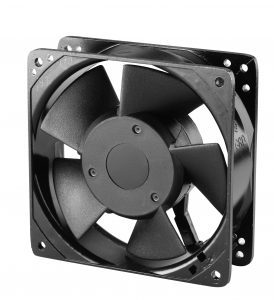
    There are several types of fans, the most common being propeller, tube-axial and vane-axial styles. Propeller fans are the simplest, consisting of only a motor and propeller. However, poor performance under resistance or backpressure and the potential for air turbulence caused by tip vortices makes them unsuitable for electronic enclosures. The tube-axial fan is the most common type used in electronic cooling systems. It is similar to a propeller fan except for a venturi tube placed around the propeller to reduce vortices. The vane-axial fan has vanes that trail behind the propeller in the airflow to straighten the swirling flow of accelerated air.

    Typically used for exhausting hot air from a system as well as honing in on specific hot spots, tube-axial fans with ball bearings typically offer long life. Exhaust fans can be mounted inside or outside the top of the cabinet. In some applications, exhaust fans are also mounted on the front, back or sides.

    Blowers
    When a cabinet is stuffed with equipment, exhaust fans alone may not be enough to remove hot air due to high airflow resistance. For such conditions, blowers are used to blow cool ambient air into the cabinet.

    A blower can be used at the bottom of the cabinet to create high internal pressure within the cabinet. Hot air can then be exhausted through the top of the cabinet through vents. Priority should be to pump air into the cabinet, so small cracks around doors and openings exhaust the air and prevent entry of dust and lint through these openings. Sometimes, adding an exhaust fan at the top can improve air flow. Most blowers are fitted with a filter at the air inlet side to prevent dust and lint from entering the cabinet.
    When selecting fans or blowers, pay attention to noise ratings. Blowers typically have noise ratings from 50 dB to 65 dB, while 30 dB to 55 dB is typical for tube-axial fans. Designers must ensure that devices, whether fans or blowers, provide adequate airflow (typically measured in cubic feet per minute, or cfm) under actual backpressure conditions. Most device manufacturers provide a performance chart that indicates airflow for various levels of backpressure. Static back pressure requirements need to be determined through empirical measurement – they can’t be calculated.

    Carefully positioning fans and blowers in the cabinet improves cooling efficiency. Mount blowers near cold air inlets preferably at the bottom of a cabinet, away from major heat sources such as transformers and power supplies. If possible, hot devices should be placed near the exhaust so that heat can vent directly to the outside. Also, avoid openings between the air inlet and outlet, which will disturb the efficiency of the air flow.

    Fan Trays
    Cabinets filled with equipment such as card cages, servers, drawers and shelves may still have hot spots that are difficult to cool because of restricted airflow. So, in addition to a blower and an exhaust fan, fan trays are used to direct airflow to these hot spots. A fan tray is basically a chassis with a bank of small tube-axial fans daisy-chained together and connected to a common power source. This chassis can be mounted directly below the sensitive equipment or a hot spot.

    Air Conditioning
    For most cooling applications, a combination of natural air removal and fans and/or blowers will do the trick. For critical and thermally sensitive applications, and also for sealed cabinets, air conditioners or cabinet coolers provide the greatest capacity to transfer heat. They also provide the ability to cool cabinets to temperatures lower than the ambient air. A typical cabinet cooler has two heat exchangers. The interior fan draws hot air over the heat exchanger inside the cabinet and blows the cooled air back into the cabinet. The heat absorbed is transferred to an outside heat exchanger where it is cooled by the ambient air using another fan. An air conditioner uses compressed Freon or other refrigerant for the cooling process.

    Most air-conditioned cabinets are sealed with only inside air circulated inside the cabinet. This prevents moist air from entering the cabinet and causing condensation that could harm sensitive equipment. However, if cabinets are not properly sealed and interior components are kept at lower than ambient temperature, silica or other dehumidifying means would be needed to prevent condensation. To size an air conditioner for an enclosure, use software provided by the manufacturer.

    Basic Airflow Calculations
    The amount of airflow that must be provided to achieve a desired cooling performance is expressed by the following equations that relate airflow to ??:

    For ?T in degrees F:
    Airflow (ft3/min) = BTU/hr / (1.08 × ??F) = (3170 × kW) / ??F

    For ?T in degrees C:
    Airflow (ft3/min) = BTU/hr / (1.95 × ??C) = (1760 × kW) / ??c

    Typical values for ?? are 10C and 18F. Add 25 percent for a safety margin (12.5C and 23F). Note that ?? represents the temperature rise over ambient air temperature. If ambient is too high, it may be difficult or impossible to maintain a safe operating temperature without air conditioning.

    Posted in Uncategorized | Leave a comment